Discover a Hypnosis-Based Approach to Quitting Drinking, and Leave the Hangovers, Wasted Mornings, and Broken Promises Behind
Without relying on willpower alone, attending AA meetings, or reading another self-help book, even if previous attempts to stop drinking haven’t led to lasting change.
From the desk of Dan Crum
Founder of DC Hypnosis · Fairfax, Virginia
How can a decision feel so certain in the morning, and turn into “just one tonight” a few hours later?
How many rules can someone make around drinking before the rules themselves become exhausting?
And what happens when “I’m done this time” becomes difficult to believe, even for the person saying it?

Those questions deserve more than another reminder to be disciplined.
Because a sincere decision to stop doesn’t automatically change what alcohol has come to represent: relief after a difficult day, a reward, or permission to finally switch off.
And if the answer being offered is hypnosis, I understand why the first reaction might be:
“How is that supposed to help?”
I had my own doubts.
Years ago, I watched a hypnosis show in Las Vegas and was convinced the people on stage were playing along.

So the next day, I volunteered.
During the experience, I didn’t feel the way I imagined a hypnotized person would feel.
But when I watched the recording afterward, I saw myself responding just as the volunteers had the night before.
I wanted to understand how that was possible.
What began as an attempt to prove hypnosis was fake became something I studied seriously, and eventually made part of my work helping people change.
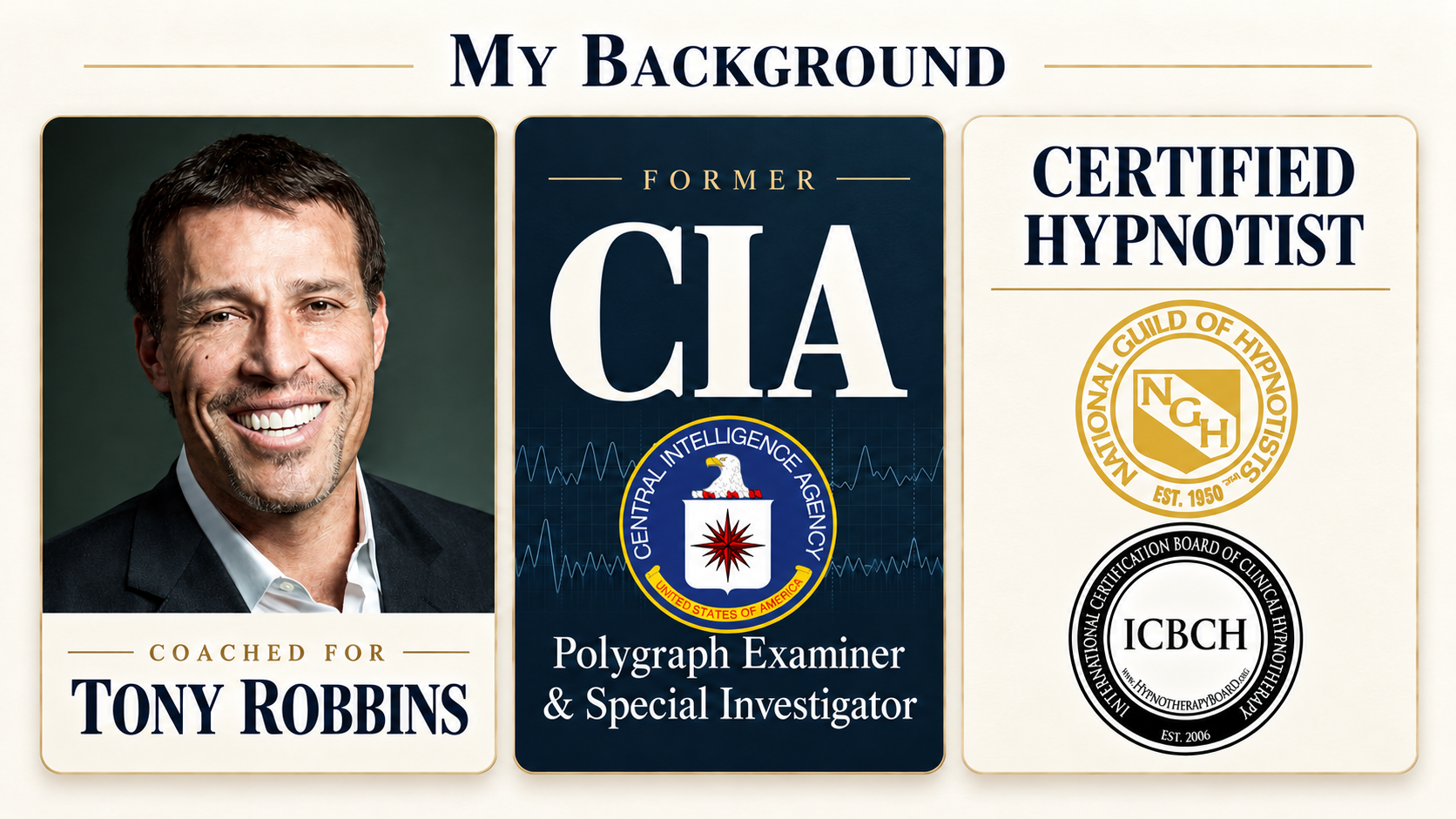
My background includes coaching for Tony Robbins and serving as a CIA polygraph examiner and special investigator.
I also became a certified hypnotherapist through the NGH and ICBCH.
Today, when I work with someone who wants to stop drinking, we look beyond how much they intend to drink.
We explore three things that keep bringing alcohol back into the picture:

01
The Situations
The places, people, and moments of the day when a drink starts to feel inevitable.

02
The Expectations
What alcohol has come to promise: relief, reward, or permission to finally switch off.

03
The Routines
The automatic habits that keep bringing alcohol back into the picture, night after night.
Because “I’m not allowed a drink” can still leave someone thinking about the drink they’re not allowed to have.
The goal of my approach is to work on those associations and practice responding differently, so becoming a non-drinker can begin to feel like a way of living.
That’s why I created this program around three daily practices.
A commitment at the start of the day.
A guided hypnosis audio.
And a practical technique to use when cravings show up later.
You’ll also learn how to prepare for the audio and understand the experience afterward, so there’s a clear process to follow.
The aim is to turn the desire for change into something concrete to practice each day.
Let me show you how it works.
The Framework
Discover the 3-Part Daily Hypnosis Framework That Helps You Strengthen Your Decision to Stop Drinking, Change the Patterns Behind the Urge, and Handle Cravings When They Hit
If you are tired of starting the morning completely certain that you will not drink, only to begin negotiating with yourself later that evening…
If rules like these keep changing once the usual drinking hour arrives…
If drinking has become connected to relaxing after work, dealing with stress, enjoying dinner, or finally switching your mind off…
And if you want to change that pattern without spending every evening arguing with yourself or relying entirely on willpower…
…then The Daily Hypnosis Reset was created for you.
Instead of treating the urge to drink as one isolated moment, this framework works with the three parts of the day that can determine what happens that evening.
Part 1
Strengthen the Decision
Every morning begins with a simple practice designed to reinforce the decision you have already made, before stress, habits, and excuses begin competing with it.
Part 2
Change the Pattern
During a guided hypnosis audio, focused attention and suggestion are used to work with the expectations attached to drinking, such as believing alcohol is needed to relax, enjoy the evening, or switch off after a difficult day.
Part 3
Prepare for the Craving
Before the usual drinking window arrives, you will practice a simple technique designed to interrupt the automatic response and give you something practical to use when the urge appears.
This gives every day a clear structure:
Strengthen the decision.
Work with the pattern.
Prepare for the moment that previously changed everything.
You will also receive short video debriefs from Dan explaining what happened during each hypnosis session, why the exercises are structured this way, and how each part connects to the drinking patterns you want to change.
This program is not for someone searching for a magic phrase, another motivational speech, or something to purchase and forget about.
It is for someone who is ready to follow a simple daily process, approach hypnosis with an open mind, and begin doing something different before another evening ends with the same regret.
The Recap
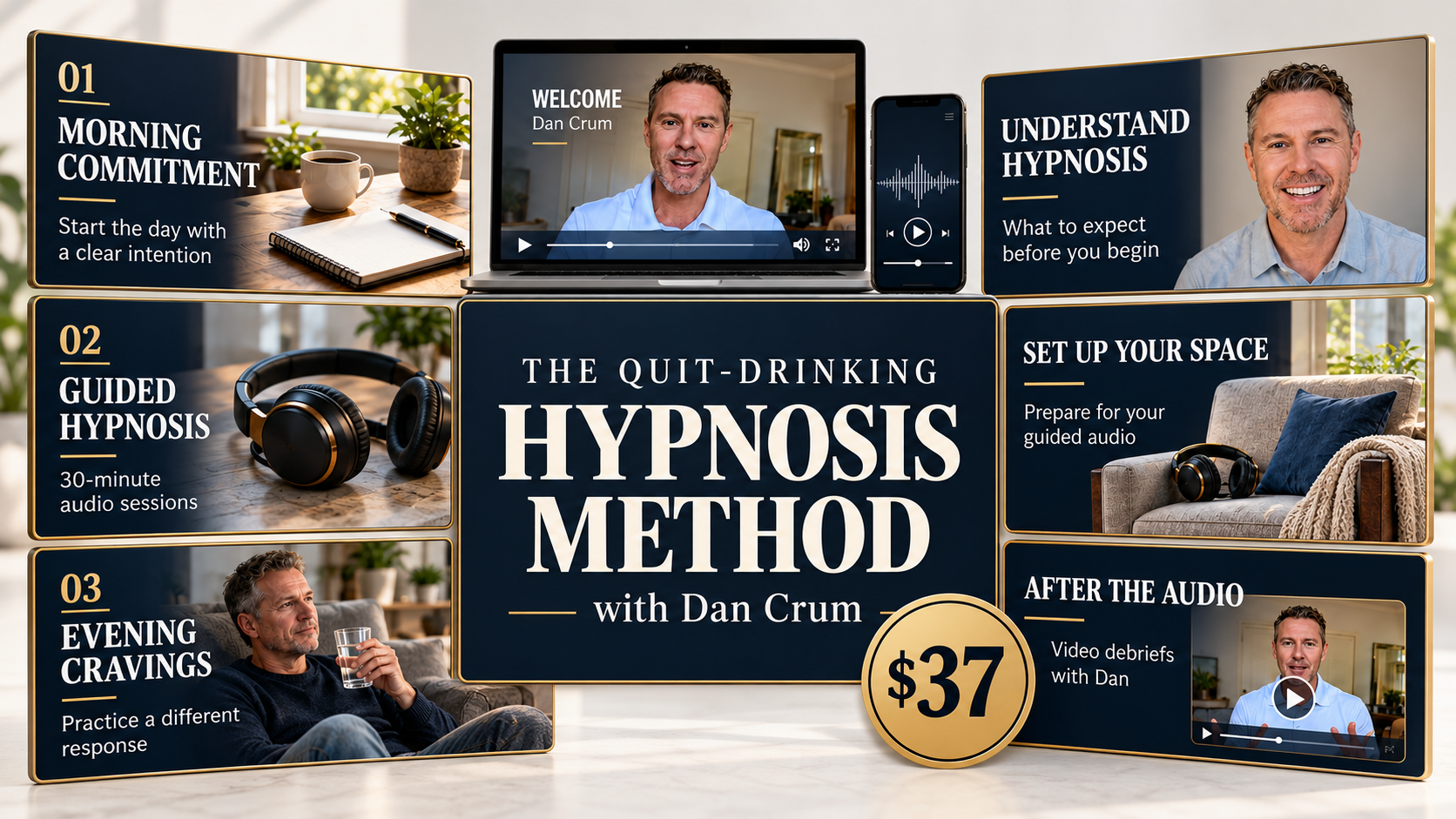
Here’s Everything You Get Inside The Quit-Drinking Hypnosis Method For Just $37
Understanding Hypnosis
Learn what hypnosis actually is, what to expect during each session, and why it feels far more natural than most people imagine.
Preparing for Your Sessions
Set up your environment correctly so you can relax, focus, and get the most from each guided hypnosis audio.
The Morning Commitment Practice
Begin each morning by reinforcing the decision you have already made, before stress, habits, and excuses have the chance to compete with it.
30-Minute Guided Hypnosis Sessions
Use focused attention and suggestion to begin changing the expectations connected to drinking, including the belief that alcohol is needed to relax, switch off, or enjoy the evening.
The Evening Craving Technique
Practice a simple technique before the usual drinking window, giving you a practical response to use when the urge appears.
Post-Hypnosis Video Debriefs
After each audio, Dan explains what happened during the session, why each exercise was included, and how it connects to the drinking patterns you are working to change.
The Daily Hypnosis Reset
Bring everything together through a clear daily structure: strengthen the decision, work with the pattern, and prepare before the moment that previously changed everything.
Client Experiences
Don’t Take My Word for It
‘Just one’ was the promise I kept breaking. The part about using a drink to draw a line under a stressful day felt very familiar.

Mark T.
I expected to feel hypnotised. Mostly, I felt relaxed and aware of what Dan was saying. His explanation afterwards answered the questions I was already thinking.

Rachel M.
By six o’clock, I could make a convincing argument for a drink no matter what I’d promised that morning. That’s why the evening practice stood out to me.

David L.
I didn’t need another explanation of why drinking was costing me. I knew. I wanted something practical to follow when that knowledge stopped being enough.

Claire S.
About Dan
Meet Dan Crum

Years ago, I attended a hypnosis show in Las Vegas and left convinced that the people on stage had to be pretending.
So the following night, I volunteered to go on stage myself.
I didn’t feel hypnotized. In fact, I was certain nothing had happened, until I watched the recording and saw myself responding in exactly the same way as the people I had doubted the night before.
That experience stayed with me. I began studying hypnosis to understand what had happened, and the deeper I went, the more fascinated I became by how expectations, associations, and automatic responses shape the decisions people make.
My background has given me a rather unusual perspective on this work.
I’ve coached people through Tony Robbins, served as a CIA polygraph examiner and special investigator, and studied how the mind and body respond under pressure. I hold a graduate degree in psychophysiology and am a certified hypnotherapist through both the National Guild of Hypnotists and the International Certification Board of Coaches and Hypnotists.
Today, I use that experience to help people work with the patterns operating beneath conscious intention, especially when simply knowing what to do hasn’t been enough to change what keeps happening.
That is the thinking behind the Quit-Drinking Hypnosis Method.

Questions
Frequently Asked Questions
Hypnosis is a state of focused attention in which you become more receptive to ideas and suggestions. You remain conscious, can hear what is happening, and cannot be forced to do anything against your will. Most people describe the experience as feeling deeply relaxed and focused rather than asleep or unconscious.
Skepticism is completely understandable, and you do not need to “believe” in hypnosis before beginning. Dan was skeptical himself and originally studied hypnosis because he wanted to prove it was fake. The program explains what to expect and helps you prepare properly before listening to any guided session.
You will receive the complete Quit-Drinking Hypnosis Method, including the morning commitment practice, guided hypnosis audio sessions, the evening craving technique, and Dan’s video debriefs. You will also learn how hypnosis works and how to prepare your environment before each session. Everything is organized into a simple daily process.
The main guided hypnosis sessions are approximately 30 minutes long. You will also complete a short morning commitment practice and rehearse the craving technique before the usual drinking window arrives. The process is designed to fit into a normal day without requiring hours of reading, journaling, or studying.
The program was created for people who may already understand why they want to stop but continue finding themselves pulled back into the same routine. Instead of giving you another set of rules, it focuses on the expectations and automatic patterns attached to drinking. Previous attempts do not prevent you from approaching the pattern in a different way.
No. This program provides hypnosis, education, and practical exercises; it does not diagnose or treat alcohol dependence or any medical condition. Abruptly stopping alcohol can be dangerous for someone who is physically dependent or at risk of withdrawal. If that may apply, speak with a qualified medical professional before reducing or stopping alcohol or beginning this program.
Experiences vary, and no specific outcome or timeline can be promised. Some people report noticing a change in how they think about drinking relatively quickly, while others need repetition and continued practice. The best approach is to follow the daily process consistently and judge the program by your own experience rather than expecting one predetermined result.